No knead bread depends on the steam created inside a pot with a tight-filling lid. I use an enameled cast iron Dutch oven but other people have commented on my website that they had success using:
a glass pyrex dish with a lid
a stainless steel pot with a lid
a stainless steel pot with foil on top and the original pot lid over the the foil
a clay baker
a springform pan with an aluminum foil top
a pizza stone with a stainless steel bowl as a cover
several people posted that they used a black cast iron pot with a lid
a roasting pan with a tightly sealed foil heavy duty top
a heavy soup pot with a lid
a corning dish with a glass lid
a Romertopf clay pot
a crock pot bowl with a lid
two nonstick bread pans, no parchment paper – put the dough in one of the bread pans, flip the other pan upside down over the first pan and put binder clips on the two ends to hold the pans together.
an oven-safe stoneware insert (removed from a slow cooker) with a cookie sheet over it as a lid.
a cast iron skillet and foil as a lid
2 1/2 quart corning ware casserole.
Keep in mind that any lid must be tight fitting because you need to create steam inside the pot and the lid should have an oven-proof handle (not plastic). Your pot will need to hold at least 3 quarts but 5 to 6 quarts is most common. Or… You can make my No Knead Ciabatta Bread or No Dutch Oven Bread – they both bake on a pan, no Dutch oven needed. Click here for the recipes.
“Which flour do I use for bread, or muffins, or cookies?” “Can I substitute one flour for another?” “Why is my flour mixture so dry?” I hope this helps clarify any questions you have about flour. By the way, with all baking the amount of protein in flour matters. The lower the protein, the softer the baked goods. So here is my simple guideline to baking with flour:
How to Measure (& Aerate) Flour Flour must be aerated before measuring because it often settles in the bag or container making it heavy and compact, resulting in too much flour being measured. Aerating basically means fluffing it up and is not the same as sifting. Flour should not be sifted before measuring unless the recipe states to do so. Sifting will result in too little flour being measured.
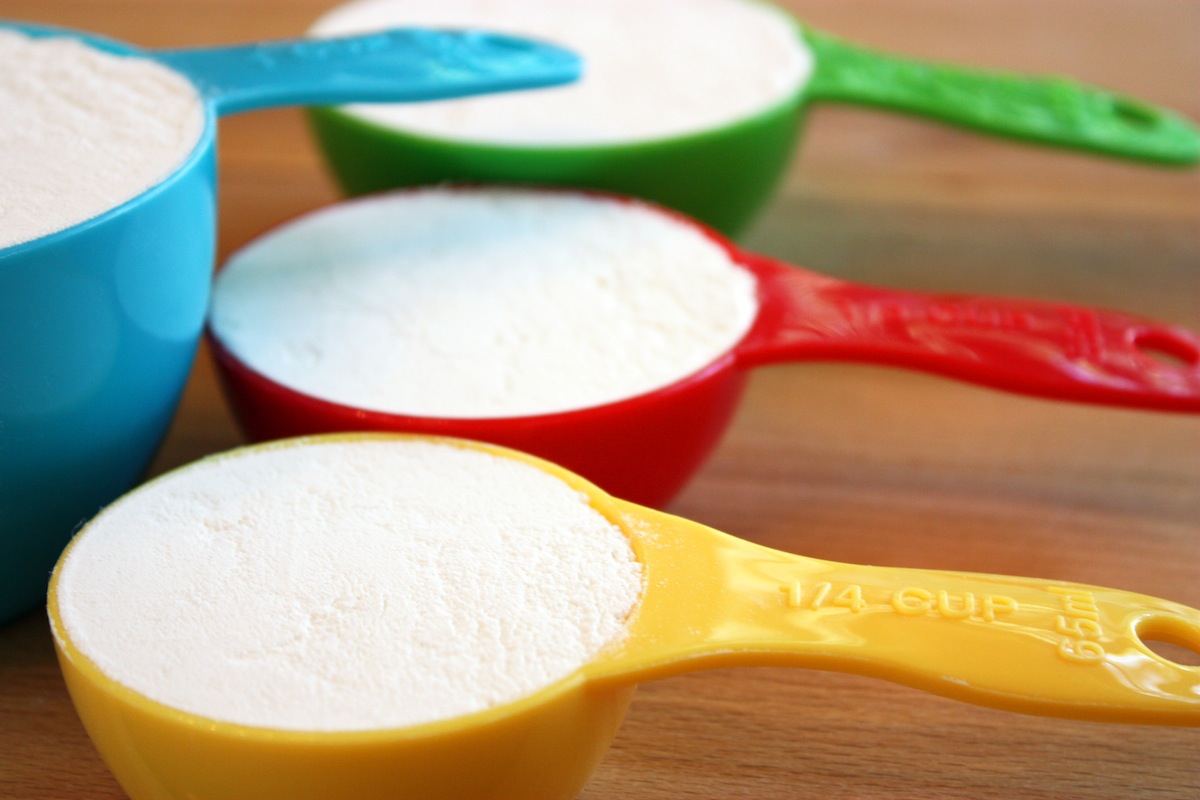
If you dip into flour without aerating, you will be getting too much flour and your dough will be too dry. To aerate flour you simply stir it around with a spoon before measuring. To measure, be sure to use a flat-topped dry measuring cup like in my photo. To see a short video on how to aerate flour click here.
After aerating, there are two ways to measure the flour: 1) Scoop & Level – Gently scoop the flour up with a spoon and sprinkle it into your measuring cup until it’s mounded above the rim. Do not tap the cup or the container of flour. Finally, level off the excess flour with the back of a knife. 2) Dip & Level – Gently dip your measuring cup into the flour until it’s mounded above the rim and level off the excess flour with the back of a knife. In my kitchen, a cup a flour weighs 4 1/2 ounces (130 grams).
The Difference Between Flours
Whole wheat flour(about 14% protein/gluten) Whole wheat flour is not the same as whole wheat pastry flour and should not be substituted for whole wheat pastry flour. Whole wheat flour is milled from hard winter wheat and is best used only for yeast breads. A loaf made entirely with whole wheat flour will be a dense and somewhat heavy loaf. For a softer loaf, it is often combined with some all-purpose or bread flour. Whole wheat flour is not suitable for other baking like cookies and cakes. *Since it contains the germ of the wheat which contains oil, once opened, this flour should be kept refrigerated in a tightly sealed container.
Whole wheat pastry flour(about 10% protein/gluten) Also called whole grain pastry flour, this flour is good for most recipes that use all-purpose flour when you want to add fiber. Whole wheat pastry flour is milled from a soft summer wheat and is best for baking cookies, brownies, pancakes, waffles, quick breads, and some cakes. Results will not be as light and soft as using all-purpose flour but you can also mix part whole wheat pastry flour and part all-purpose flour for soft baked goods with added fiber. (I use this flour the most in cookies, brownies, even pancakes & waffles for extra fiber) This flour is not a good substitute for whole wheat flour and is not suitable for baking yeast breads. Don’t have whole wheat pastry flour? Regular whole wheat flour is not a good substitute – your baked goods will be dense and heavy. Look for whole wheat pastry flour at health food stores or you can order it online. Once opened, it should be kept refrigerated in a tightly-sealed container.
Bread flour(about 14% protein/gluten) This flour is designed for yeast baking. It helps create more gluten for a better rise in yeast doughs. Use it for yeast bread and pizza dough for a chewy texture and good structure. However, all-purpose flour works almost as well with yeast. From my experience, if you don’t have bread flour, all-purpose flour can be used as a substitute in yeast bread and pizza dough.
All-purpose flour (about 10% protein/gluten) The name says it all. Use it for cookies, cakes, quick breads, yeast breads, pies, pancakes, etc.
Pastry flour(about 9% protein/gluten) This flour falls between all-purpose flour and cake flour and can be used in pastries, cookies and cakes. This flour is not suitable for baking yeast breads.
Cake flour(about 8% protein/gluten) This very fine grain flour is good in light and airy cakes like angel food cake. However, if a recipe does not call for cake flour and you decide to use it, you would use more (2 tablespoons more per each cup). Conversely, if a recipe calls for cake flour and you don’t have it, you can make your own: For one cup of cake flour, measure one cup of all-purpose flour, remove 2 tablespoons of flour and replace that with 2 tablespoons of cornstarch. I do not use cake flour – I don’t find it necessary. This flour is not suitable for baking yeast breads.
Self-rising flour(about 8 % protein/gluten) This soft flour is similar to pastry flour but has salt and baking powder added. Many southern recipes call for this flour in biscuits and pancakes but if the recipe calls for all-purpose flour and you substitute self-rising flour, you will need to adjust any added salt and baking powder. (one cup of self-rising flour contains 1 ½ teaspoons of baking powder and ¼ to ½ teaspoon of salt) This flour is not suitable for yeast breads.
I hope these simple flour basics are helpful. – Jenny Jones
If your parchment paper stuck it’s from using an inferior brand. Reynolds brand always works for me. I got a cheaper parchment paper once and everything stuck to it. I only use Reynolds brand – it never sticks. (This is not a paid endorsement, I’m just sharing what works for me). NOTE: Wax paper is NOT the same as parchment paper. DO NOT USE WAX PAPER in the oven because it will melt onto your food.
Don’t have whole wheat pastry flour? Regular whole wheat flour is not a good substitute for whole wheat pastry flour. It will give you a heavier and more dense product. Whole wheat flour is usually ground hard wheat that is high in gluten and best for baking bread. Whole wheat pastry flour is a much finer grind and is made from a soft wheat low in gluten. It is best for sweets like cakes, muffins, and cookies. Whole wheat pastry flour is available at Whole Foods and can easily be purchased online (King Arthur Flour has it). If you use my recipes regularly it’s worth the effort to find whole wheat pastry flour so you can add whole grains to your homemade baking. Otherwise, you can often use all purpose flour instead but you might need a bit more flour.
Don’t have buttermilk? You cannot substitute milk for buttermilk. There is no perfect substitute for buttermilk, especially in baking. Due to its acidic nature, buttermilk makes baked goods lighter and fluffier so it’s worth using the real thing. You can freeze unused buttermilk in portions the size you will need for future recipes. It will separate when frozen but when you thaw it, just stir it back up. To substitute for buttermilk, there are several options:
1) Combine yogurt with milk, using plain yogurt and milk, about half and half.
2) Add 1 tablespoon of fresh lemon juice or distilled white vinegar to 1 cup of milk (not fat-free) and let it stand for 5 minutes or longer.
3) Combine sour cream with milk or water until it’s the thickness of buttermilk.
Don’t have bread flour? You can use all purpose flour. Bread flour has more protein than all-purpose flour and that helps with gluten development, which is helpful when working with yeast. With bread flour, pizzas may be a little crispier and breads may be a little chewier and have more body but it’s not a huge difference.
Don’t have instant yeast? Regular active yeast can be used wherever I use instant yeast. But be sure to check the package directions for the required temperature of the liquid. My brand of instant yeast calls for 120 degrees F while my regular active yeast calls for 110 degrees F.
Don’t have 1% milk or low fat milk? Use a mixture of 3 parts water to 1 part whole milk. For example, to make the equivalent of one cup of 1% milk: combine 3/4 cup water + 1/4 cup whole milk. (For 2% milk the mixture should be 50/50, i.e. half water and half whole milk)
Don’t have baking soda? Do not use baking powder instead. Baking powder is not a substitute for baking soda. Baking soda reacts with acidic ingredients in a recipe to make baked goods rise.
Don’t have extra light olive oil? For baking you can use any vegetable oil. My preference in avocado oil but they are not all the same. Some are too strong for baking. I use Chosen Foods brand avocado oil
Don’t have a Dutch oven? To see what other cooks have used in place of a Dutch oven, click here.
Don’t want to use eggs? I’m sorry to say I don’t know of any good substitute for eggs. For anyone with egg allergies, rather than change a recipe and risk being disappointed, you can find many eggless recipes the are already proven online. If cholesterol is a concern, all my research has shown that egg yolks may contain cholesterol but they are low in saturated fat and they do not raise serum cholesterol in the blood. Eggs also contain nutrients that may help lower the risk for heart disease, including vitamin B12, riboflavin, and folate. Besides providing protein, iron, phosphorus, iodine, and vitamin E, eggs are also one of the few natural sources of vitamin D.
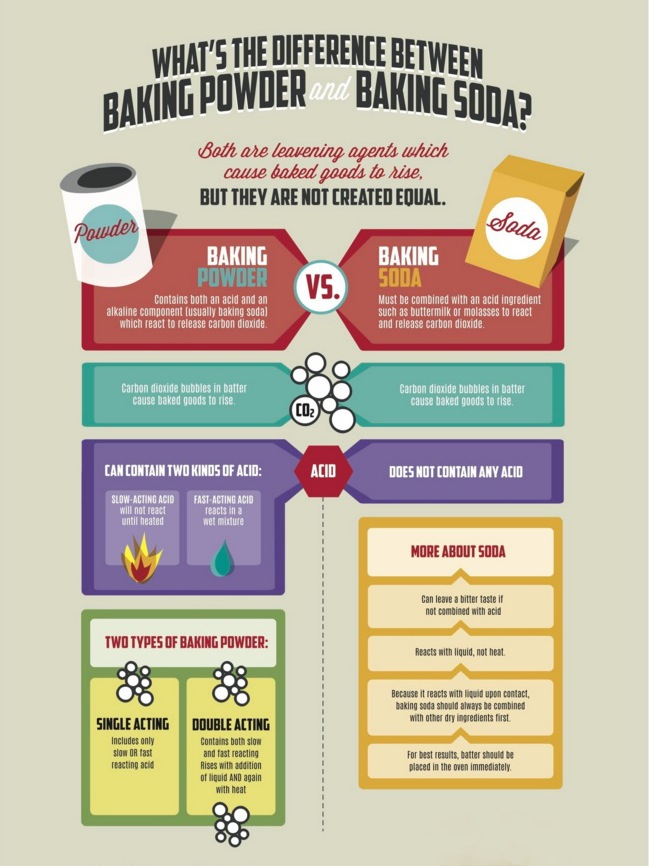
Baking powder and baking soda are NOT THE SAME. They can not be substituted for one another. They are both leaveners but they are chemically different.
Baking soda is used in recipes that contain acidic ingredients like buttermilk, brown sugar, yogurt, lemon juice, honey, vinegar, or chocolate (except Dutch process). The acid in the recipe reacts with the baking soda, allowing your baked goods to rise. Baking powder is generally used when there is no acidic ingredient in the recipe. Bottom line: baking soda needs an acid; baking powder does not. – Jenny Jones
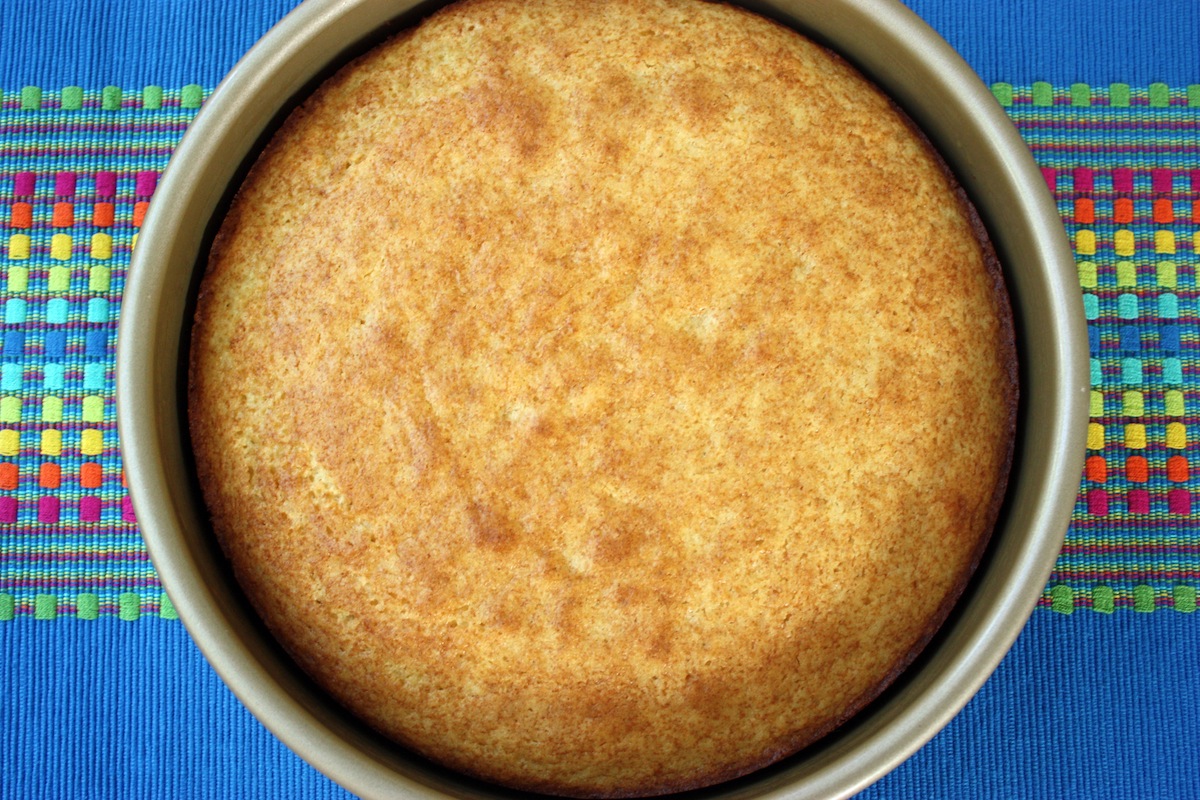
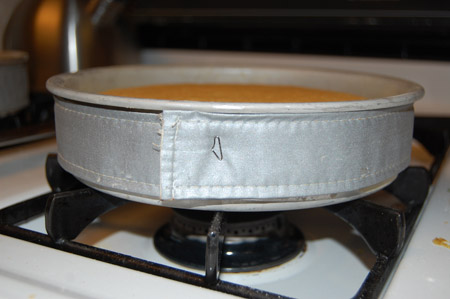
If you bake a lot of cakes there are two issues that need fixing. One is that they rise too much in the center and the other is that the edges get over-baked and dry. A cake strip will fix that. Here is my yellow cake baked with no cake strip. It’s domed in the middle and the edges are overdone and dry.
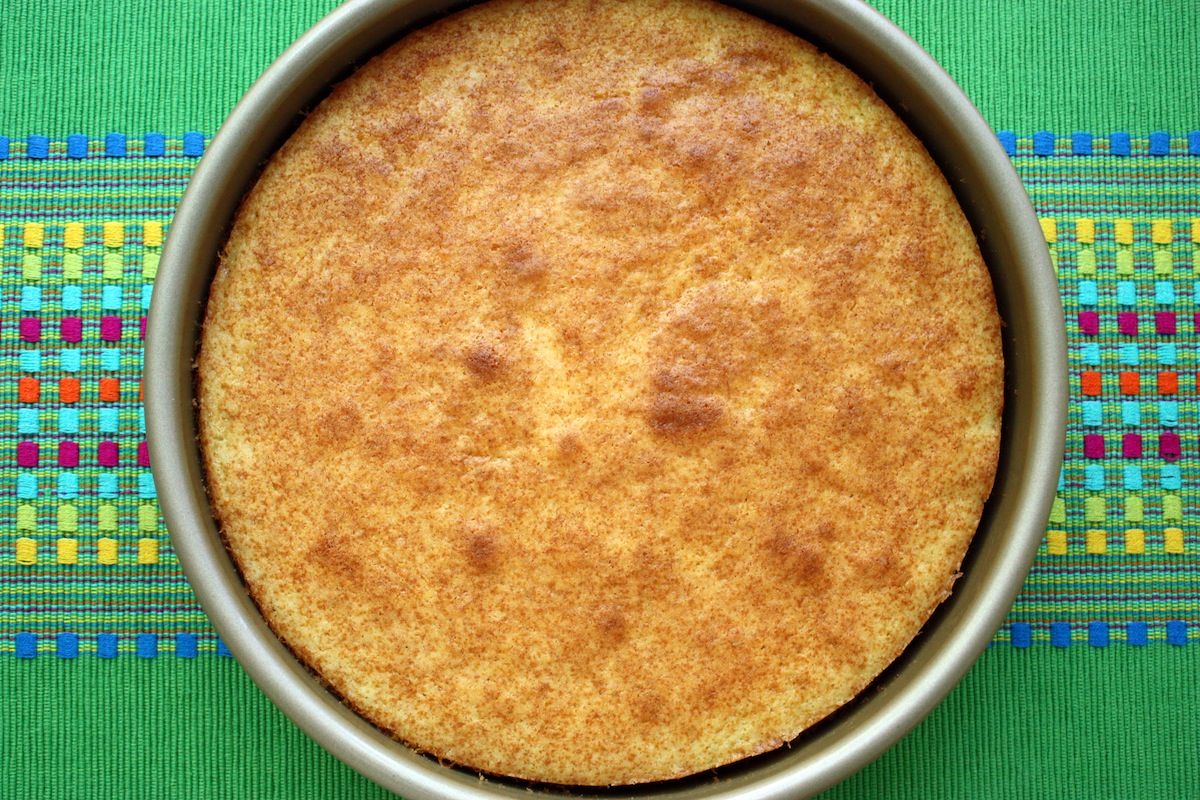
And here it is with a cake strip – perfectly flat and the edges are soft and evenly baked.
A cake strip is easy to use. You just soak it in water for about 15 minutes, then press out the excess water and wrap it around the pan just before baking.
It protects the edge of the pan from getting too hot and the cake will bake evenly. If you can’t find one, you can fashion your own using fabric. I have never done that but you can find lots of how-to’s in the internet. They’re also called baking strips for cakes.
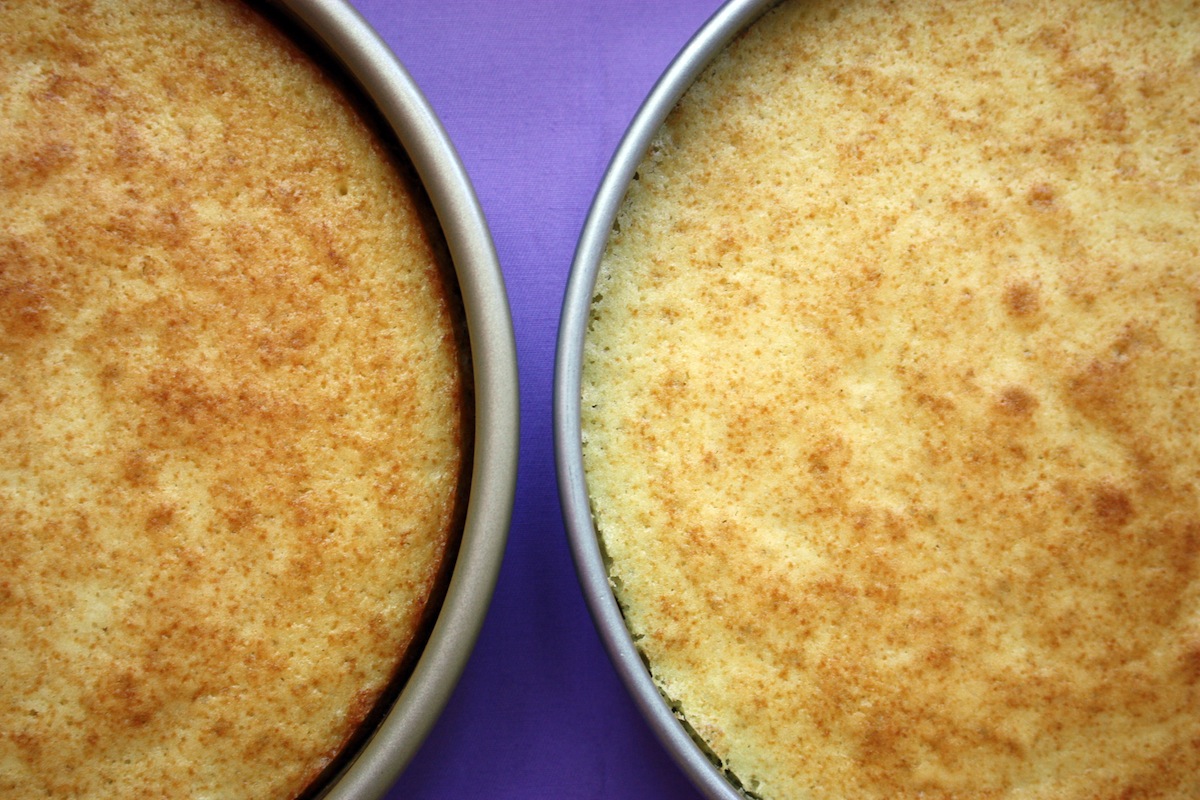
While working on this recipe I was surprised by something I learned about cake pans. It’s about the color. I always knew that a dark pan absorbs more heat so baked goods will brown more than in a light colored pan. But I baked two cakes, both with cake strips, in two different pans that I considered light colored. But look at the difference…
The pan on the left is my more expensive Williams-Sonoma Gold Touch pan that I never thought of as dark. The pan on the right is a cheaper silver colored pan (with no brand name so I don’t even know where I got it) but the cake in the cheaper silver pan came out perfectly. The edges were velvety soft and the cake didn’t brown too much. The one on the left was okay but the edges pulled away a bit and it browned a little more. Bottom line: use a silver colored pan and a cake strip for a perfect, soft, yummy cake.
Speaking of cake, this simple yellow cake is one of my easy-to-make healthier cakes and it’s my go-to cake for all kinds of frosting and filling. It’s soft and not super sweet… and it’s made without butter. I’ll be posting the recipe soon, so get your cake strips ready! – Jenny Jones
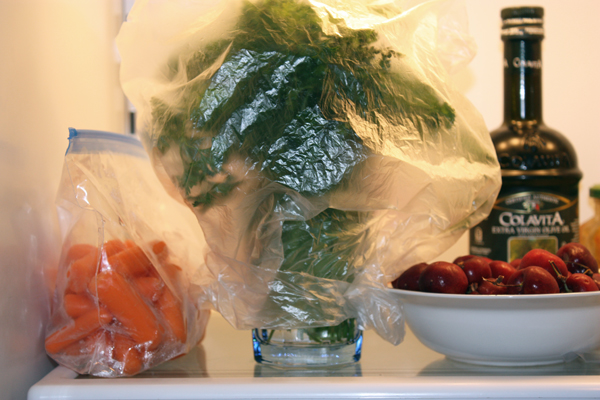
I’ve had this parsley for over a month! If you’re tired of throwing away wilted parsley, you will love this easy way to store fresh parsley. Just put it in a glass of water and cover it loosely with a plastic produce bag. I use the bag I brought it home in from the store. Fresh parsley is great to use in cooking but I only use a little at a time. I used to keep it in the vegetable drawer in a plastic bag but I always had to throw it away before I could use it all up. There had to be a better way. So I tried putting it in a glass of water in the fridge and it kept a little longer but after a few days it was drying out.
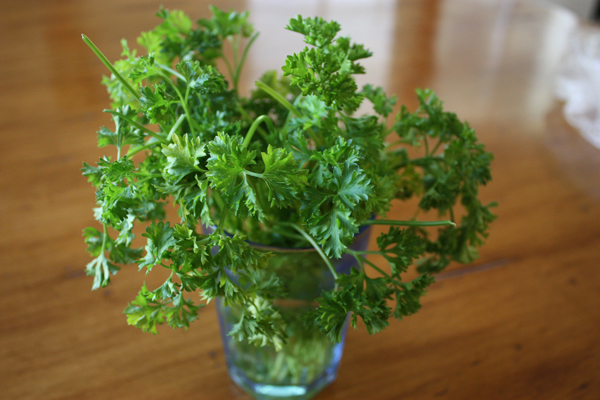
The solution to drying out had to be plastic so I tried putting a light weight plastic produce bag loosely over the parsley and glass and I could not believe how long it lasted. I put it away on November 23rd. That was five weeks ago! And look at it today…
I’ll be using this parsley until 2015! I’ll let you know when it finally runs its course – probably six or seven weeks. I just had to share!
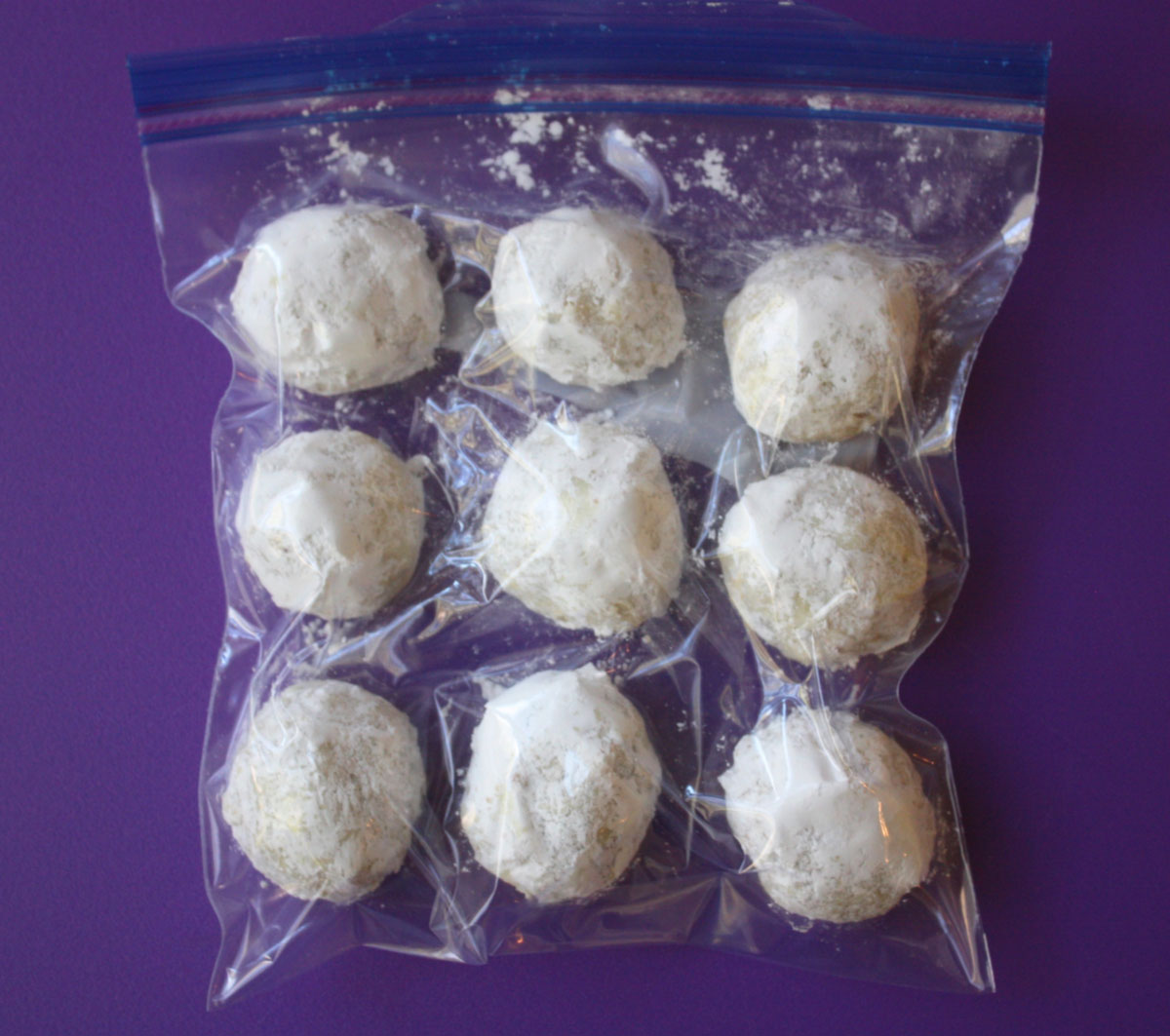
Guess what? There is no difference between frozen and freshly made pecan balls. I tested them myself and asked two other people to do a blind taste test and no one could tell the difference. This is good news because anything you can make ahead for the holidays is helpful. I’m sure there is more than one way to freeze these delicate Christmas snowball cookies but here is how I did mine:
Once they were completely cool and after the second roll in powdered sugar I gently placed them in a freezer bag so they were not touching.
I removed as much air as possible from the bag and placed them gently in the freezer.
To thaw I let them thaw overnight in the refrigerator and then brought them to room temperature.
Then I gently rolled them in powdered sugar again to freshen them up.
So there it is. This is how you can freeze your homemade pecan balls and have extra time for…. making more! To make these super easy Christmas cookies, click here for the recipe. – Jenny Jones
PLEASE NOTE: I NEVER EXPECTED SO MANY INTERNATIONAL VISITORS AND HAD NO EXPERIENCE WITH MEASURING BY WEIGHT. THE GENERALLY ACCEPTED STANDARD FOR FLOUR IS LISTED IN BLUE AND HOW IT WEIGHS IN MY KITCHENIN RED.
Flour 1 cup = 4 1/4 ounces = Generally Accepted 120 grams – When I weigh I get 125-130 grams
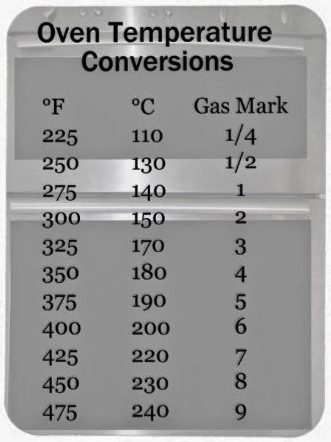
Oven Baking Temperatures 225 degrees F = 110 degrees C = 1/4 gas number 250 degrees F = 130 degrees C = 1/2 gas number 275 degrees F = 140 degrees C = 1 gas number 300 degrees F = 150 degrees C = 2 gas number 325 degrees F = 165 degrees C = 3 gas number 350 degrees F = 180 degrees C = 4 gas number 375 degrees F = 190 degrees C = 5 gas number 400 degrees F = 200 degrees C = 6 gas number 425 degrees F = 220 degrees C = 7 gas number 450 degrees F = 230 degrees C = 8 gas number 475 degrees F = 245 degrees C = 9 gas number 500 degrees F = 260 degrees C = 10 gas number
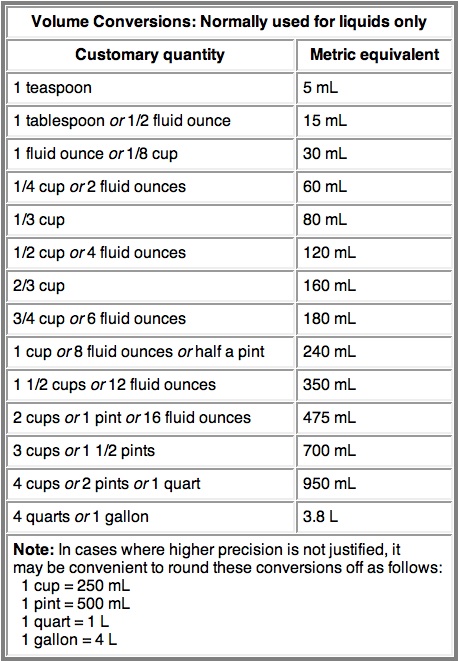
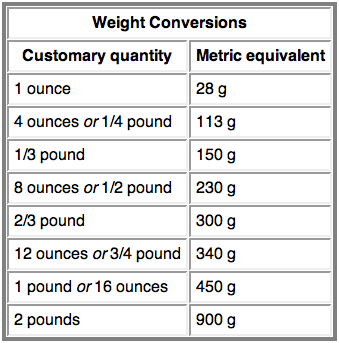
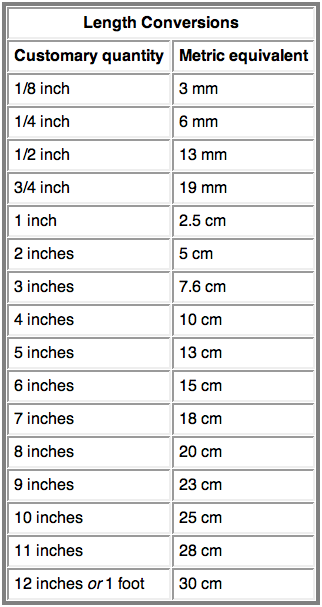
…Below are all the charts I had perviously posted, compiled from other sources…